Custom Calf Research
The best product testimonial is objective calf research.
Nouriche conducts calf research both for internal needs and as custom research for clients. Studies may compare:
- Milk replacers
- Calf starter feeds
- Feed additives
- Vaccines
- Other technologies used in dairy-beef calves
The research program is designed to develop strategies that improve calf production by lowering cost, improving performance, or both, frequently involving calf nutrition, including milk replacer and calf starter ingredients and formulations.
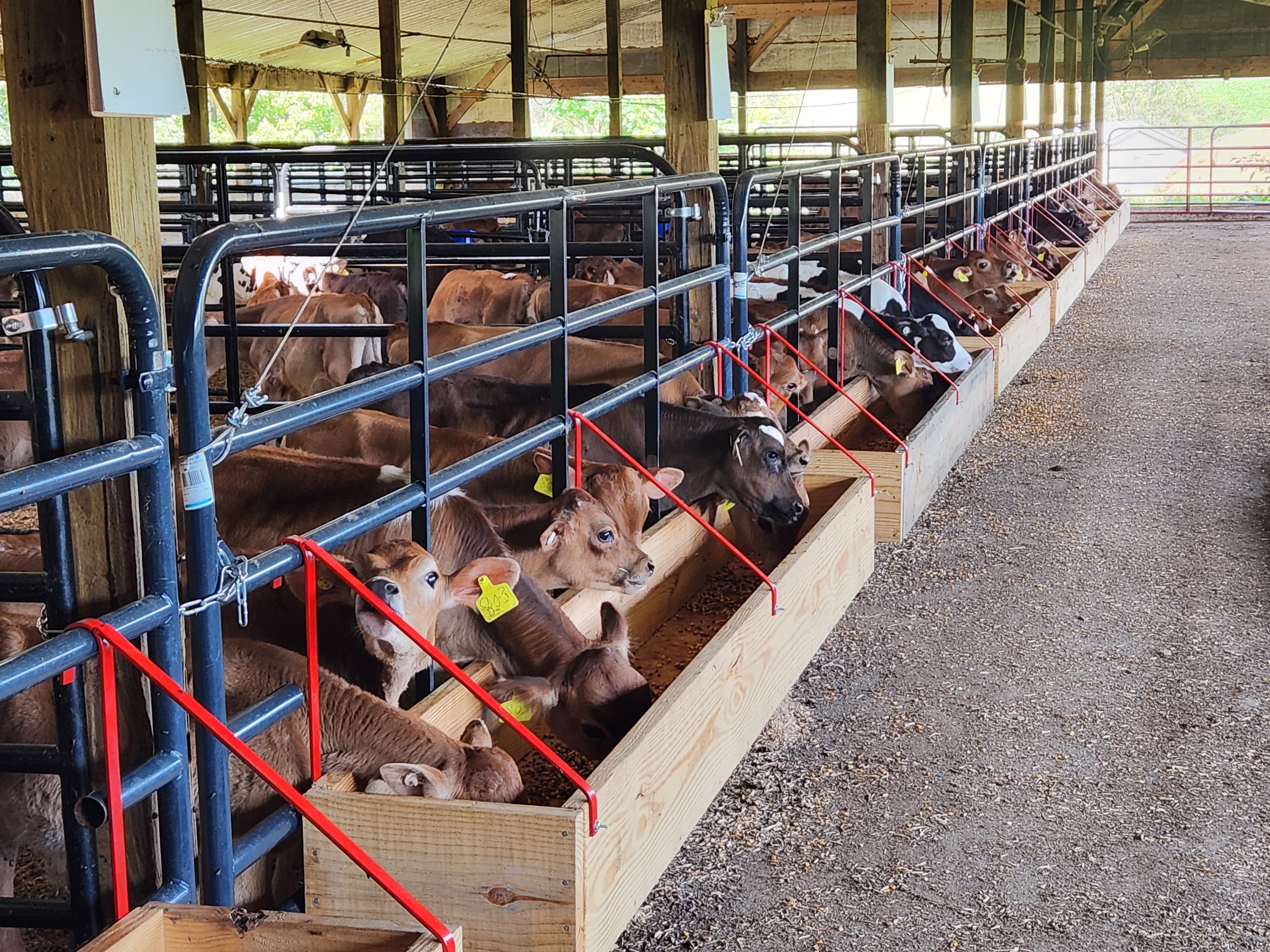
Research Capacity & Data Collection
Treatments are equally distributed throughout the barn. Calves are raised in all-in/all-out facilities, so research trials can be completed in a matter of months.
256
Individually-fed nursery calves
12
Pens for growing calves, ~6–18 weeks
30
Days to interim & final reports
Data Recorded
- Individual calf live weights
- Daily feed delivery
- Medication records
- Mortality
- Economics
Performance Measures Calculated
- Total gain
- Daily gain
- Feed efficiency
- Cost of gain by period
- Overall cost of gain
A Typical Trial Weighs Calves Individually On
Other data can be collected for clients on a case-by-case basis. Clients receive both statistical analysis and raw data, with interim and final reports delivered within 30 days after trial completion.
Experimental Design
Completely randomized design
Trials are typically conducted as completely randomized design experiments. A common example uses two milk replacer treatments, with odd-numbered pens assigned to one treatment and even-numbered pens to another.
2 × 2 factorial arrangements
When two calf-starter treatments are added alongside two milk replacer treatments, the research can use a 2 × 2 factorial arrangement, with each treatment combination distributed repeatedly throughout the barn.
Statistical power
The research program typically provides approximately 64 to 128 experimental units per treatment, enough replication that P-values below 0.001 are not uncommon when meaningful treatment differences exist. Analysis is conducted using Statistix for Windows, Version 10.
Research Interests
An independent calf research facility focused on improving calf production by lowering cost, improving performance, or both. Research commonly involves:
- Milk replacer ingredients
- Milk replacer formulation
- Calf starter feed ingredients
- Calf starter formulation
Example Study, 2023
Dried Cheese Milk Replacer
Dr. Drew presented an example evaluating the replacement of conventional milk proteins and milk-replacer fats with dried cheese containing casein and butterfat. The research found equal calf performance across treatments, while milk replacer ingredient cost decreased as Dried Cheese MR increased, reducing calf cost of gain. It’s a representative example of the commercially relevant research conducted at the facility.
The Facilities
Nursery Facilities
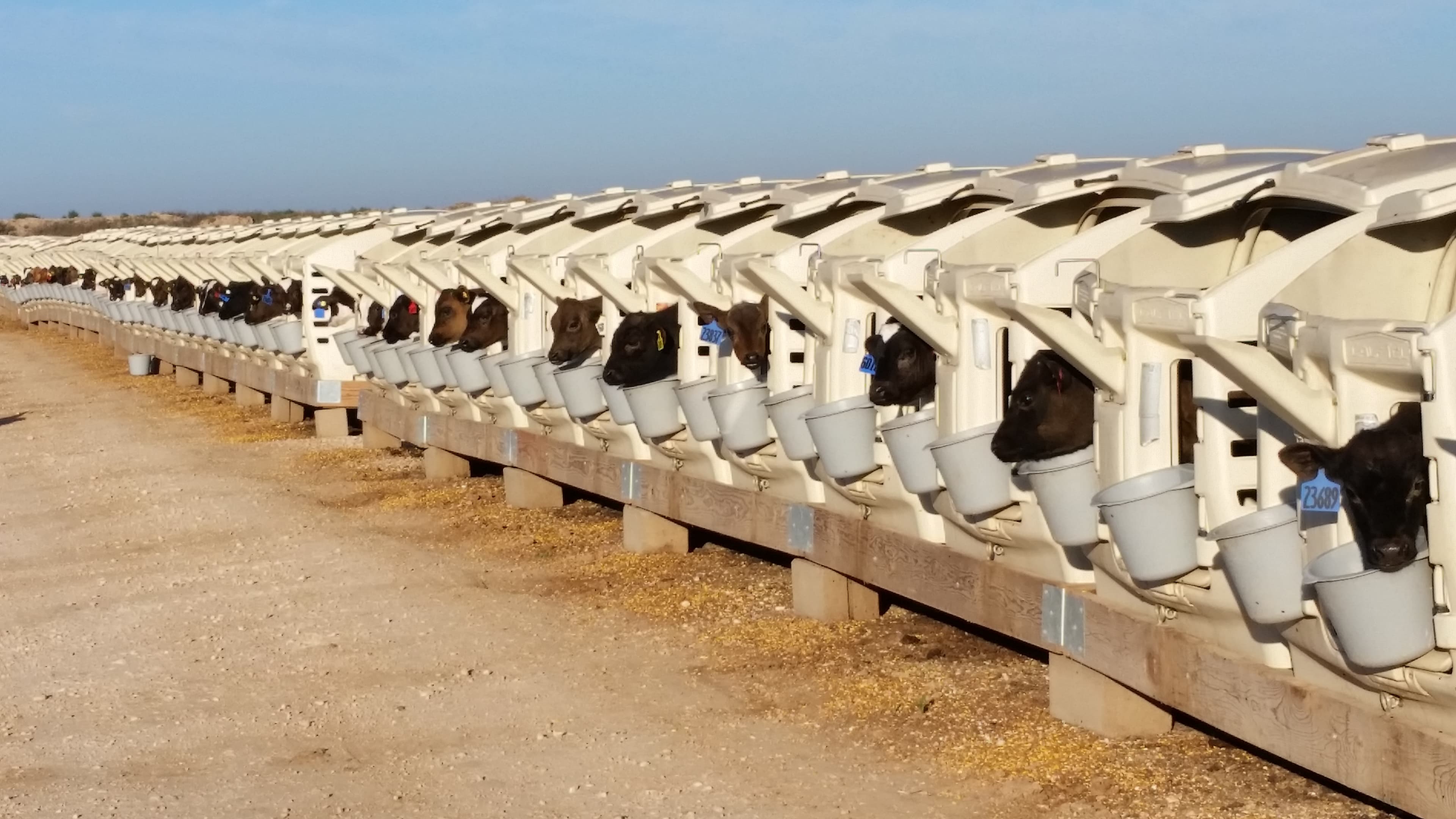
- 200 calves in individual pens
- Pens 48 in. wide × 32 in. deep, approximately 10.7 sq ft of floor space per calf
- Each pen has a feed bucket, water bucket, milk replacer bottle holder, and individual record card
- Barn approximately 50 ft wide × 150 ft long, with 12-ft side walls
- 4 ft of adjustable curtains and an approximately 24-ft roof peak, open for ventilation
- Total air volume of approximately 48,000 cu ft, about 300 cu ft per calf
Daily feed allocation and medical treatments are recorded for each calf.
A typical nursery protocol weighs calves on:
The facility has conducted outside-company research as well as internal research involving different forms of vitamin E, feed strategies, and milk replacer strategies.
Grower Barn
- 10 pens, approximately 20–25 calves per pen
- Tests different feed ingredients and feed formulations
- Approximately 50 ft wide × 160 ft long
- Approximately 20 ft of storage in the center, with two bulk feed bins
- Pens approximately 16 ft wide × 40 ft long
- Two 16-ft gates per pen for cattle handling, plus a 4-ft man gate for easy access
Growing Calf Research Capacity
- Up to approximately 400 calves across two barns
- Pens of approximately 10–20 calves for substantial replication
- Compares feed ingredients, feed additives, nutrient levels, and feed programs
- Calves can be grown to approximately 400 lb at 18–20 weeks of age, though trials more commonly grow calves to approximately 250–350 lb at 14–16 weeks
Research Farm Location
The Nouriche Research Farm is located:
- Approximately 1½ hours north of the Pittsburgh, Pennsylvania airport
- Approximately 2 hours east of the Cleveland, Ohio airport
- Less than 30 minutes from hotels and restaurants
Cost & Timeline
As an example, a trial involving two milk replacer treatments and two calf starter feed treatments can be completed in less than six months, for a total cost of approximately:
$45,000–$65,000
That’s roughly a 30% to 50% savings compared with university research. Individual trial costs may be higher or lower depending on the actual requirements of the study. Research studies are personally supervised by Dr Drew Vermeire, and trials are conducted throughout the year on a first-come, first-served basis.
A 50% non-refundable deposit is due at booking, with the remaining 50% due when the final report is delivered.
What kind of research can we conduct for you?
Tell Dr. Drew what you’re trying to prove, improve, or compare. He’ll help you scope a trial that fits your timeline and budget.
Discuss Custom Research